October 12, 2026
How to do Game Day, the Right Way
The secret to feeding your game day crowd isn’t what you think.
When it comes to game day, it usually has a funny way of ignoring whatever plans you made and just kind of unraveling into complete chaos. You can ask everybody who’s coming, ask everybody what they want to eat, make the grocery list, and plan out a perfect spread, but it always ends up either being too much, too little, consuming your entire game day experience, or worse, all of the above. The problem stems from the fact that we, generally speaking, try to plan our game day food the same way we would plan a regular meal.
Ironically, Game Day Doesn’t Play by the Rules
See, for most meals, it’s pretty straightforward: the goal is to get everything finished at roughly the same time, and then everyone eats it at the same time. Game day works differently: not everyone eats at the same time — or even sits down for one shared meal. Most people are snacking throughout the whole day, which means how you prepare and how much you prepare plays a much bigger role in your food plans. Now, with that, you might be thinking, “Bigger is better. Lots of people need lots of options, and lots of food.” However, it’s actually the opposite. You shouldn’t be thinking about it as one giant meal. Instead, think about game day food as something that happens in waves, instead of food coming out all at once. It should be dispersed throughout the day. This allows you to adapt to your party’s needs. Maybe people are drawn more to the mozzarella sticks than the chips and dip. Staggering your serving will help you gauge what foods people want and are actually eating versus what is just sitting around. This keeps the food fresher, gives everyone more variety, and makes the whole day a lot easier to manage.
Building the Team
Now, the best game day foods all have a handful of things in common:
- They’re easy to serve.
- They’re easy to eat.
- They’re easy to replenish.
- Arguably most importantly, they’re just as appealing after a few hours as they were at kickoff.
And that’s one of the reasons I love using frozen and refrigerated foods. Don’t get me wrong: there’s a time and place for making a big batch of something from scratch, but when it comes to game day, instead of committing to one enormous serving of something that’s going to take you hours to make, you can spend a fraction of the time making small amounts of a variety of options.
This does two very important things for us as the host:
- It saves us time.
- It’s more affordable.
It also helps to reduce food waste. By working with pre-cooked frozen foods, you get the flexibility of working around a tighter budget because you can pick and choose which foods to add in. By cooking our food in batches rather than all at once, we can cut down on food waste because we’re not having to cook a bunch of extra food at the beginning, worried about running out, only to find we cooked way too much of something that people weren’t really interested in.
Speaking of interest, it’s important to keep in mind variety. I like having a mix of foods rather than relying on a couple heavy hitters. Think about when you go to a stadium to watch a game in person. The concession stand doesn’t just sell burgers and hot dogs. They sell a variety of things because when you’re in the moment, watching the game, and you’re around other people, you need variety:
- Something crispy
- Something heavy
- Something light
- A few easy dump-and-serve snacks
They all come together to make the giant spread that embodies game day food.
The Gameplan
Okay, at this point, you know why it doesn’t work, and you also know the pieces to make it work. That said, things can still fall apart pretty quickly, mostly because a lot of us try to make everything all at once. It sounds like a fantastic idea on paper. People show up at 12, so let me get everything done by 11:30. That way, I can enjoy my time.
In reality, what happens is you enjoy the first hour or so, and then you realize, “Oh crap! Everything’s sitting out. Everything’s getting cold. Crispy stuff is getting soggy. Cold stuff is getting warm.” Before the second half of the game, nobody wants to touch any of the food, and it’s not because they’re not hungry. That’s why you need to plan out your day appropriately.
I’m not going to tell you that it’s going to be a one-and-done and you’ll get to enjoy the game the entire time, because it’s not true. If you’re hosting a party, there are certain responsibilities that come with that. However, that doesn’t mean you should be working the whole time, and that’s why we picked out specific foods.
Now we need to plan out the execution. Instead of putting everything out at once, treat the food like a rotation. Start with a few things that may take a little longer to prepare. As things start to dwindle down, have someone hold your beer and go tap in the next food, cooking another round as it’s needed, as you see fit.
This is why it’s so important that we use those frozen and refrigerated shortcut foods, because it makes it so easy to go in and reheat. If you’re using an air fryer, dump in half a bag of curly fries, spritz them with oil, and let them rip. When you notice the stash getting low, if you’re using an oven, then great. All you have to do is just slide in a new batch of whatever you’re cooking when you notice it’s getting low.
This makes it so much easier to stay on top of your food without getting overwhelmed, because yes, the goal of the party is for everyone to have a good time, but that doesn’t mean you should be working nonstop. With this plan, food is staying hot and fresh, the spread never feels empty, and you’re not trying to coordinate 10 different dishes all at the same time.
The Star Player Has to Eat, Too
If you’re anything like me, then chances are, when you’re hosting people, whether it’s for a game day or just a simple dinner, you’re not sitting down and eating until everyone has had seconds. That’s something I’m actively trying to be better about, because hosting a party doesn’t mean you don’t get to enjoy the party.
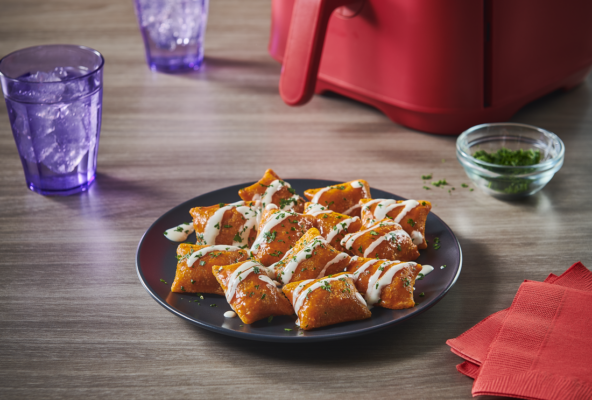
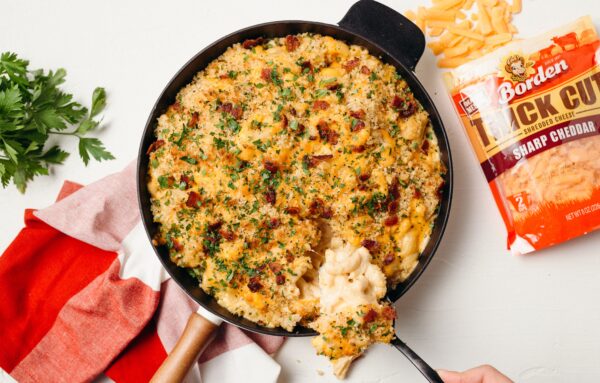
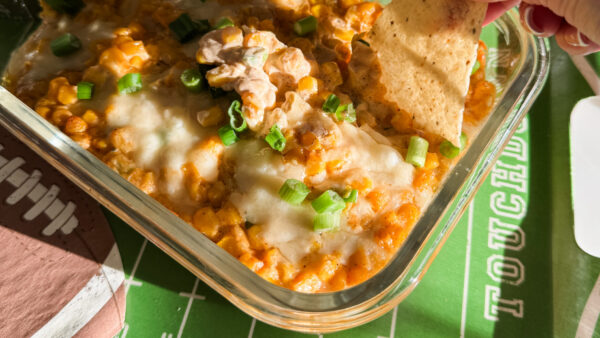
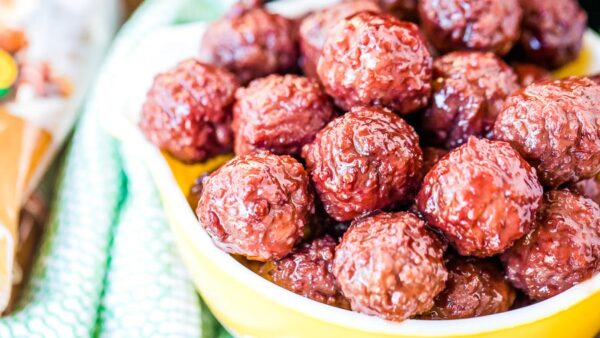
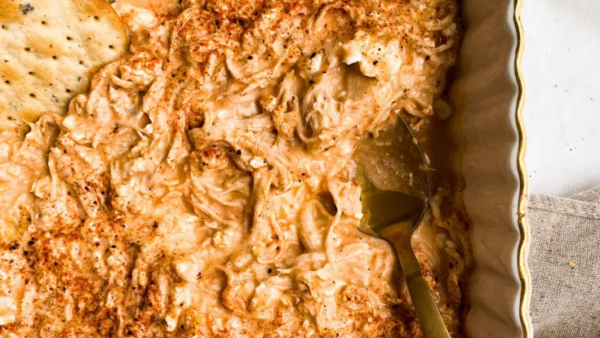
For this game day spread, we chose a mix of crowd-pleasing favorites, from crispy mozzarella sticks and curly fries to potato skins and chips and dip. These options offer a variety of textures and flavors, with frozen snacks that are easy to make in batches and refrigerated dairy favorites that round out the spread. The goal is to keep everyone happy without requiring the host to spend the entire game in the kitchen.
This is where our game plan really shines for you as the host. Each of those foods we picked requires almost zero knowledge and almost zero cooking skills. This means if you notice Dave from work has eaten half the platter of potato skins, you can easily delegate him to throw some more on a sheet tray and toss them in the oven.
Everything we picked is quick, easy, and delicious.
- Quick means it’s not taking up too much of your time.
- Easy means if you’re getting a little overwhelmed, someone else can take over or help out.
- Delicious means everyone’s having a good time.
You’ve built systems around the way you host, so everything works for you rather than the other way around.
The Best Plan is the One That Can Pivot
No matter how much planning you do, you can never really predict exactly how a game day party will unfold. One snack might disappear immediately, while another might last, and another might barely get touched. Someone shows up after skipping breakfast. Maybe the game goes into overtime, and people are getting hungry again. It’s not a problem with your planning. Rather, it’s the reason why your plan should be flexible.
Keeping a mix of frozen and refrigerated foods on hand means you can respond to what actually is happening in real time instead of trying to predict everything beforehand. Make more when you need more. Hold off when you don’t. Switch things up when everyone unanimously decides they no longer want chicken wings.
Whether you’re the person who has the entire game day mapped out or the person who flies by the seat of their pants, the food should be able to keep up. That’s what makes frozen and refrigerated foods such a useful part of the Easy Home Meals Tailgate Club playbook. Because when game day refuses to follow the rules, your food doesn’t have to either.